- American Realist
- Posts
- Trump Issues Most Serious Threat Yet, China Responds
Trump Issues Most Serious Threat Yet, China Responds
"Since you didn't give me..."
In partnership with

Receive Honest News Today

Join over 4 million Americans who start their day with 1440 – your daily digest for unbiased, fact-centric news. From politics to sports, we cover it all by analyzing over 100 sources. Our concise, 5-minute read lands in your inbox each morning at no cost. Experience news without the noise; let 1440 help you make up your own mind. Sign up now and invite your friends and family to be part of the informed.
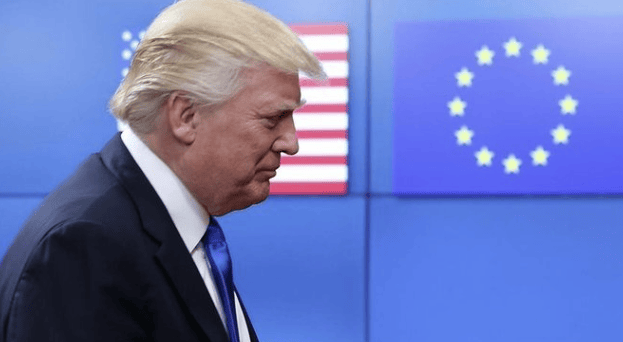
Trump just sent an unprecedented threat to the Europeans. Just days ago, President Donald Trump announced via social media that the United States would impose a 10% tariff on imports from eight European nations—Denmark, Norway, Sweden, France, Germany, the United Kingdom, the Netherlands, and Finland—starting February 1. He stated that these tariffs would increase to 25% on June 1 if a deal is not reached for the "complete and total purchase" of Greenland by the United States. This move marks a significant escalation in Trump's renewed push for U.S. control over the Arctic territory, which is currently a self-governing part of Denmark.
Trump's interest in acquiring Greenland dates back to his first term in office. In 2019, he publicly expressed a desire to purchase the island, citing its strategic importance for national security and economic reasons. At the time, the proposal was met with resistance from Danish and Greenlandic officials, who emphasized the territory's autonomy and rejected the idea outright. The concept was not entirely new; historical records show that previous U.S. administrations, including that of Harry Truman in 1946, had explored similar options, though none advanced to formal negotiations or threats.
In 2026, Trump has revived the initiative with greater intensity. Following a U.S. military operation in Venezuela earlier in the month, he reiterated that acquiring Greenland is essential to counter potential influences from Russia and China in the Arctic region. The island's location positions it as a key point in emerging sea routes due to melting ice caps, and it holds substantial deposits of rare earth minerals estimated to be worth over $1 trillion. These resources are critical for industries such as electric vehicles, renewable energy, and defense technology. Trump has argued that Denmark lacks the capability to adequately protect Greenland from external threats, pointing to NATO's role in the region's security. Under a 1951 defense agreement between the U.S. and Denmark, renewed in 2004, the United States already maintains military bases on the island, including a Space Force installation, and can expand its presence as needed.
The tariff announcement came amid discussions within NATO about bolstering defenses in the "High North." Just days before, alliance members had agreed to deploy additional troops to Greenland as a preliminary step to enhance Arctic security. However, Trump viewed this as insufficient and potentially obstructive to U.S. objectives. He has stated that the U.S. needs full control to ensure global stability, emphasizing that "the world is not secure unless we have complete and total control of Greenland." In interviews and public statements, Trump has described the acquisition as a matter of national priority, suggesting that if negotiations fail, alternative measures could be considered, though he has not specified details beyond the economic pressures.
Adding a personal dimension to the geopolitical strategy, Trump's latest comments tied the Greenland pursuit to his views on the Nobel Peace Prize. In a message sent to Norway's Prime Minister Jonas Gahr Støre over the weekend, Trump expressed frustration over not receiving the award in 2025, which was given to Venezuelan opposition leader María Corina Machado. "Considering your Country decided not to give me the Nobel Peace Prize for having stopped 8 Wars PLUS," Trump wrote, "I no longer feel an obligation to think purely of Peace, although it will always be predominant, but can now think about what is good and proper for the United States of America." He referenced his administration's role in resolving conflicts and questioned Denmark's historical claim to Greenland, noting a lack of "written documents" to support it. Norway's leader confirmed the message's authenticity and clarified that the Nobel Committee operates independently of the government.
The response from involved parties has been swift. China's Foreign Ministry spokesperson Lin Jian addressed the issue in a January 19 press briefing, accusing the U.S. of fabricating a "China threat" to justify territorial ambitions. "We urge the United States to stop using the so-called ‘China threat’ as a pretext to pursue selfish interests," Lin stated, highlighting concerns over global stability. Greenland's Prime Minister Jens-Frederik Nielsen issued a defiant statement, declaring that the territory "will not be pressured" into any deal and reaffirming its commitment to self-determination. Protests in Nuuk, Greenland's capital, drew crowds opposing the U.S. proposal.
European leaders have convened for an extraordinary meeting later this week, organized by European Council President Antonio Costa, to discuss countermeasures. Germany's Vice Chancellor Lars Klingbeil described the tariffs as "blackmail" and indicated that the EU is preparing unified responses, potentially including retaliatory trade actions. Other nations, such as the UK and France, have echoed commitments to international law and NATO solidarity with Denmark. Financial markets reacted with volatility, as investors assessed the risks of renewed trade tensions affecting commodities and transatlantic relations.
This development underscores the intensifying focus on Arctic resources and security amid climate change. Greenland's vast mineral wealth could diversify global supplies currently dominated by China, impacting sectors from technology to defense. NATO's framework provides existing protections, including Article 5, which treats an attack on one member as an attack on all. Yet, Trump's approach has sparked debates on alliance unity and the balance between collective defense and national interests.
As negotiations remain stalled, the situation risks broader implications for U.S.-European ties and global trade dynamics. Officials from both sides continue to engage in diplomatic channels, with a U.S. congressional delegation visiting Denmark to address tensions. The outcome could reshape alliances in the coming months, with Greenland at the center of a high-stakes international dialogue.